 UnitBasse
Basics · Gear
Choosing your first bass and a practice amp
To start, get a 4-string, long or medium scale depending on the size of your hand. A bass that’s comfortable and well set up matters more than the brand or the price. For practicing at home, a small amp is enough, or headphones with an audio interface and an amp sim.
4 or 5 strings
A 4-string to start: a narrower neck, one less string to mute, and every method book is written for it. A 5-string can come later if you want one; the shapes are the same.
Scale length
Scale length is the length of the vibrating string, from the nut to the saddle. It changes how comfortable your fretting hand is, and the tone a little.
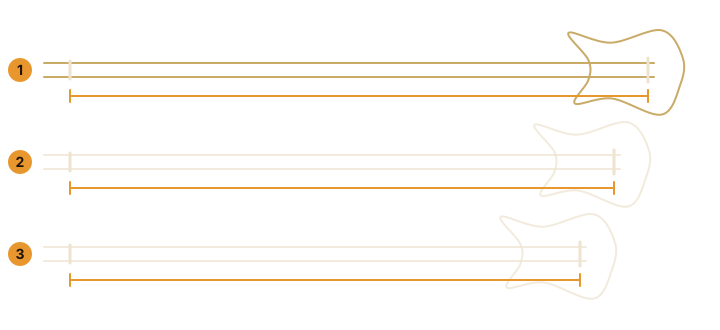
- Long, about 34 inches (86 cm): the most common.
- Medium, about 32 inches (81 cm).
- Short, about 30 inches (76 cm): the frets are closer together, easier for small hands and kids, and the tone is rounder.
A short scale isn’t a toy: plenty of seasoned bass players use one for its tone. The best thing is to try one, and check that your hand reaches the first fret without stretching your arm (see the posture page).
Pickups
The pickup picks up the string’s vibration. Its type and position give the bass a good part of its character.
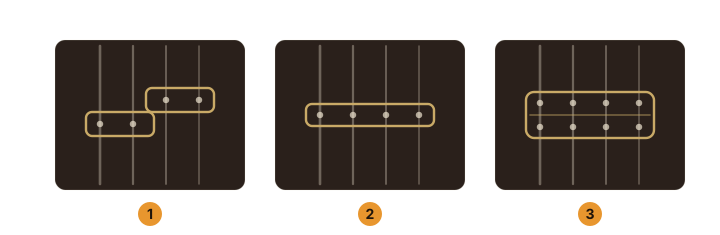
- The split single-coil, in two halves: a round, powerful tone, with plenty of low end.
- The single-coil: more highs and detail. With two of these, you blend the tone between the neck and the bridge.
- The humbucker: more output and less hum, a thicker tone.
Many basses combine two pickups, often a split coil at the neck and a single-coil at the bridge: one bass then covers several tones. Near the neck, the tone is rounder; near the bridge, tighter and more nasal.
Passive or active
- Passive: the pickups go straight to the output, with a volume and a tone control. Simple, no battery, and you shape the tone at the amp.
- Active: a built-in preamp, powered by a battery, adds an EQ on the bass (bass, treble, sometimes mids) and a hotter output. More controls, but a battery to keep an eye on: when it runs low, the sound crackles or cuts out.
What to check, new or used
- The neck: sight down it from the headstock; it should be straight or have very slight relief, with no twist.
- The frets: no dips under the low strings, no sharp fret ends along the edges of the neck.
- Intonation: the 12th-fret harmonic and the note fretted at the 12th fret should give the same note.
- The tuners: they turn smoothly and hold the tuning.
- The weight: wear it standing for a few minutes, with a strap.
- Noise: turn the pots and wiggle the plugged-in cable: nothing should crackle.
High action or a badly adjusted neck can be fixed: a setup by a luthier transforms an entry-level bass. A warped neck, badly worn frets or a jack that cuts out cost more.
Strings
- Roundwound: a bright, present tone, the most common.
- Flatwound: smooth under the fingers, a soft, thumpy tone, the sound of 1960s records.
- Gauge, the thickness of the strings: lighter is easier to press down; heavier gives more tension and more low end. The most common set is around .045 to .105 (thousandths of an inch). Only change gauge along with a neck adjustment.
The practice amp
- A small 20 to 50 W combo for home. For the same volume, bass needs more power than guitar: low end takes energy.
- A headphone output, to practice at any hour without bothering anyone.
- The computer route: the bass plugs into an audio interface connected to the computer, and you listen on headphones or speakers. An amp sim makes the tone, with effects and a metronome. The thing to watch is latency, the delay between the string and the sound: keep it low in the interface settings, with a small buffer size.
The accessories that matter
- A tuner: a pedal, a clip-on or an app.
- A solid cable: it’s the most common point of failure.
- A wide strap, to spread the weight across your shoulder.
- A stand, so your bass stays within reach: you play more often when it’s not in its gig bag.
- A padded gig bag, to carry it.
With UnitBasse
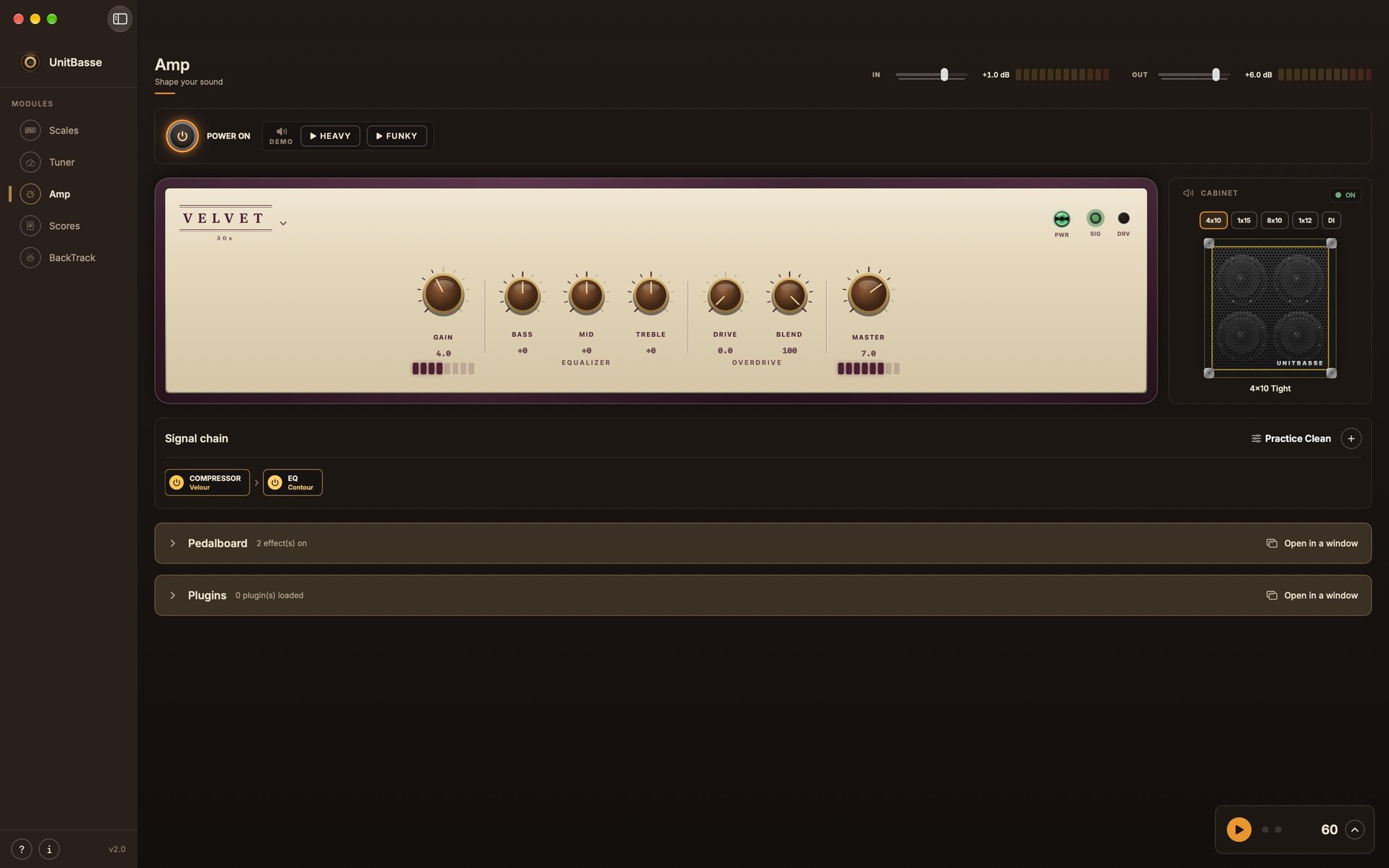
UnitBasse is a complete practice amp on the Mac: eight amp models, five cabs, 22 effects, your own Audio Unit plug-ins, and presets. In the same window: a Tuner, a Metronome, and BackTrack, a band that plays along with you.
You need an audio interface, and any Core Audio interface that runs between 22 and 96 kHz will do. You choose it in Settings › Audio: the same device for input and output. For two different devices, you create an aggregate device in Audio MIDI Setup. Without an interface, UnitBasse switches to Demo mode: you can look through everything, and the amp’s DEMO buttons, HEAVY and FUNKY, let you hear the current settings on a recorded bass riff.
Frequently asked questions
Which bass should I start on?
A comfortable, well set-up 4-string, long or medium scale depending on your hand. Have a luthier set it up if needed: a simple, well set-up bass beats an expensive, badly set-up one.
Short scale or long scale?
Long scale (34 inches, 86 cm) is the most common. Short scale (30 inches, 76 cm) has closer frets, easier for small hands, and a rounder tone. The best thing is to try both.
Do I need an amp to start?
Yes, or headphones: unplugged, an electric bass is barely audible, and you end up plucking too hard. A small amp with a headphone output, or an audio interface and an amp sim, is enough.
Can I play bass on headphones?
Yes: through an amp’s headphone output, or through an audio interface connected to a computer, with an amp sim. Low end comes through well on headphones.
How much amp power do I need at home?
20 to 50 W for practicing at home. To play with a drummer, you need a lot more: bass needs more power than guitar.