 UnitBasse
Tips · Routine
A bass practice routine
in 20 minutes a day
A little, but every day, and always in the same order: warm-up, technique, scales, rhythm, then playing for fun. A well-built 20-minute session beats an hour of random noodling.
The idea: consistency beats length
Your fingers and your memory learn through repetition, and they forget between sessions. Twenty minutes every day gets you further than two hours on Sunday: each day you pick up where you left off the day before, before you’ve forgotten it.
A fixed order helps too: you don’t have to decide what to do, you just start.
The 20-minute session

- 3 min of warm-up.
- 4 min of technique.
- 4 min of scales and arpeggios.
- 4 min of rhythm.
- 5 min of playing.
| Time | What | How |
|---|---|---|
| 3 min | Warm-up | Your hands without the bass, then the 1-2-3-4 exercise, slowly. |
| 4 min | Technique | One exercise at a time, with a metronome: alternating fingers, string crossings, muting. |
| 4 min | Scales and arpeggios | A scale or an arpeggio in a new key, following the circle of fifths. |
| 4 min | Rhythm | A single note, over varied figures: quarter notes, eighth notes, rests, short and long notes. |
| 5 min | Play | With a drummer, a band or a song. For fun, and to put it all into practice. |
Variations
- 10 minutes, on busy days: two minutes per part.
- 45 minutes, on free days: the same order, each part longer. Take a break halfway.
Write down your tempos
Keep a notebook, on paper or on your phone. For each exercise: the tempo you reached without mistakes, and the date. Go up 5 BPM only once it feels easy. When you read back through your notebook, you see your progress, even in the weeks when you feel stuck.
One topic a week
Rather than skimming everything, pick a theme for the week: arpeggios, playing with a pick, short notes, a new scale. It fills the technique and scales parts. The next week, pick another.
The days you don’t feel like it
Five minutes anyway. Tune up, play a scale, play a song you love. What matters is not breaking the chain: the urge to play often comes back after a few minutes.
With UnitBasse
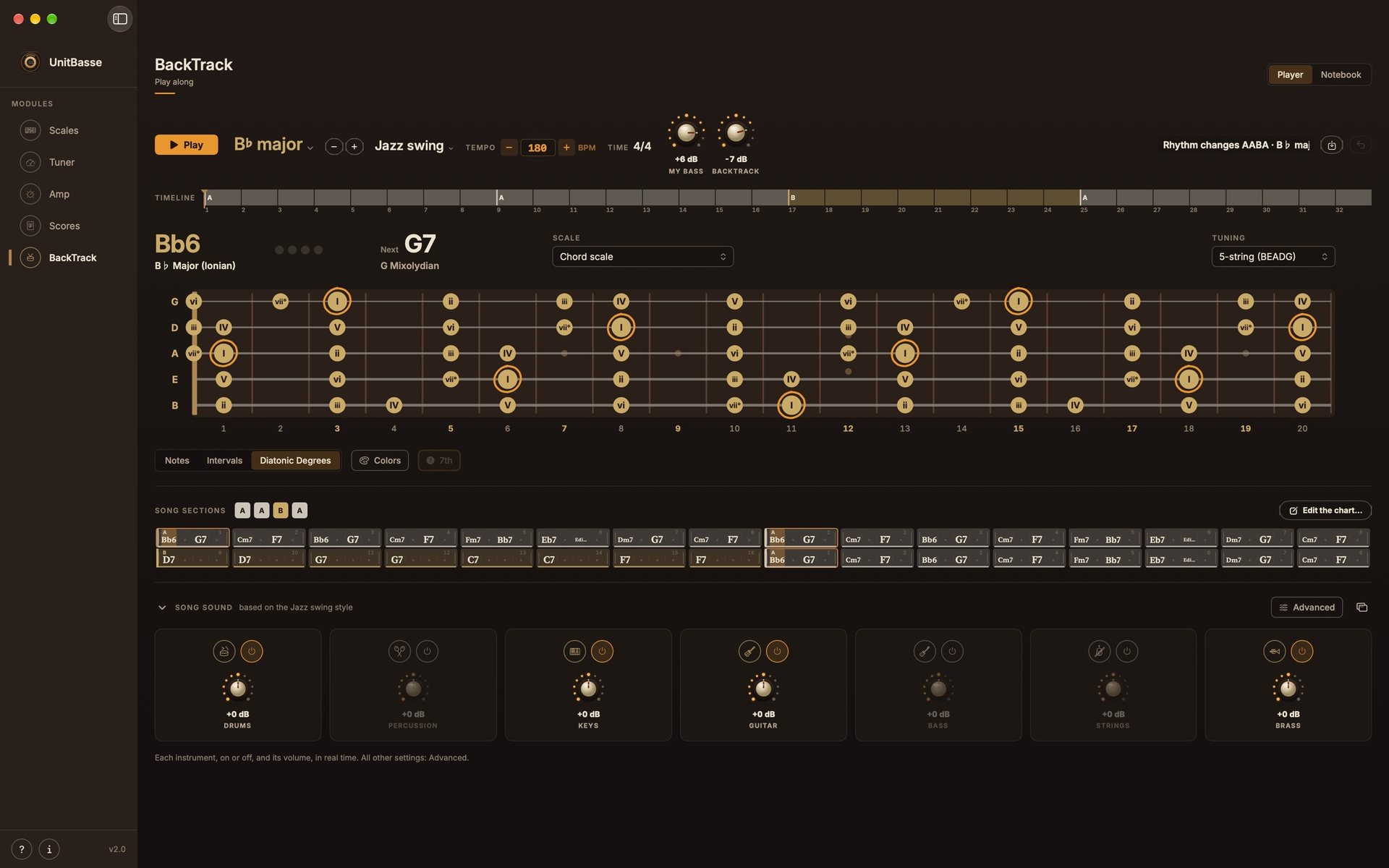
Every part of the session has its tool in the same window. The Tuner to start. The Metronome for technique and rhythm, from 30 to 300 BPM, with its −5 and +5 buttons to go up step by step. BackTrack to play with a band, in 16 styles and 131 chord progressions. And Scores to write your own exercises and keep them in your notebook.
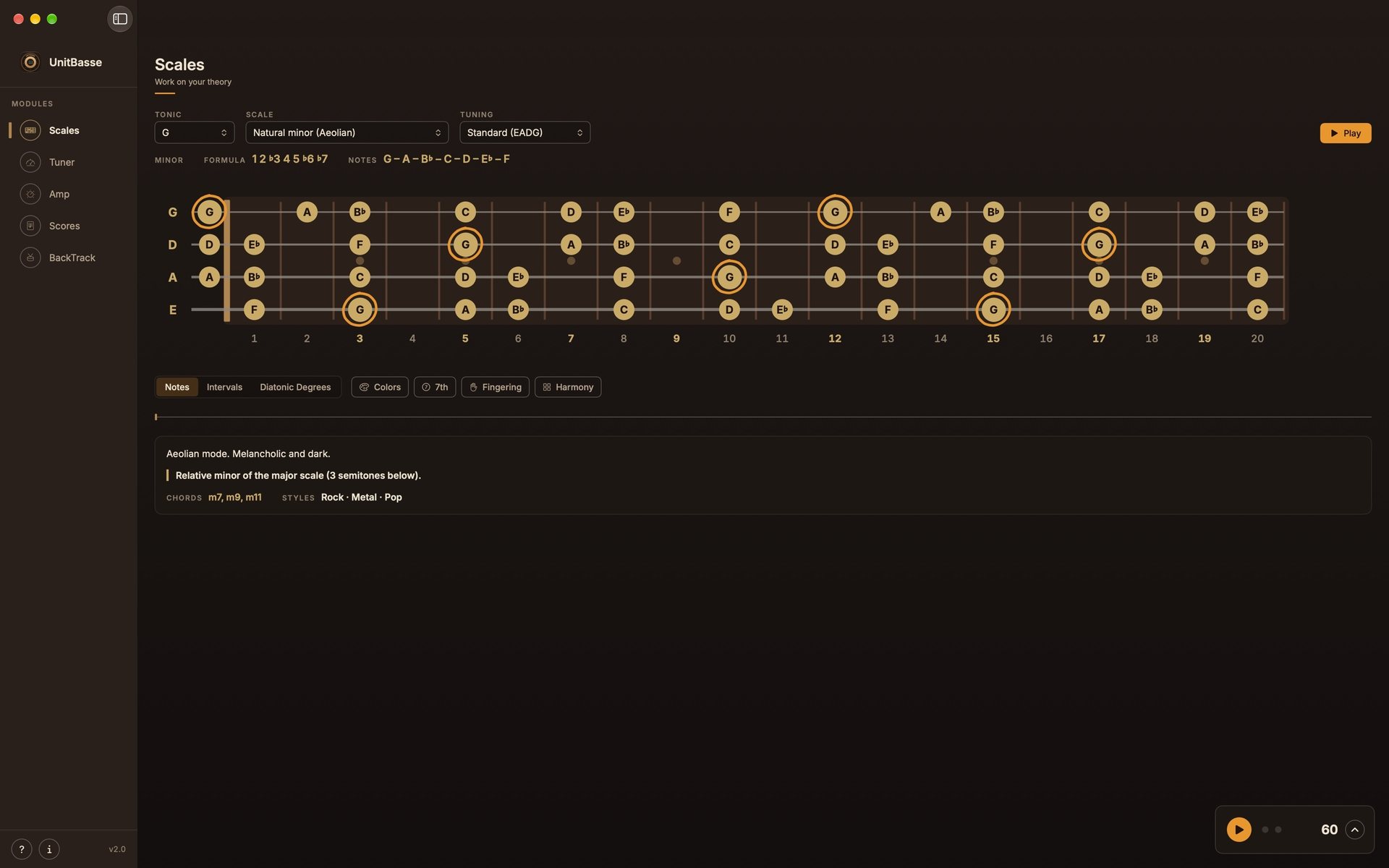
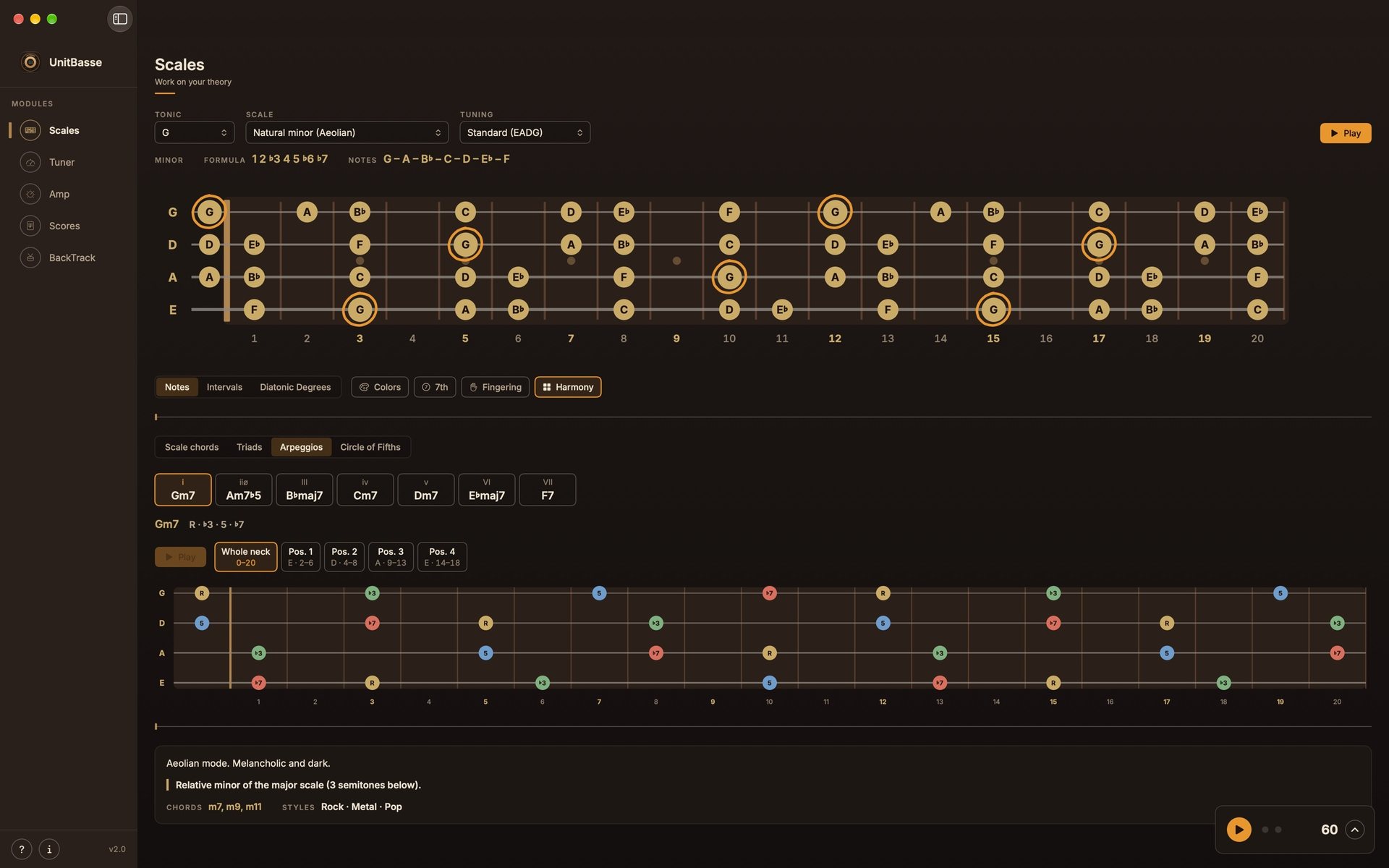
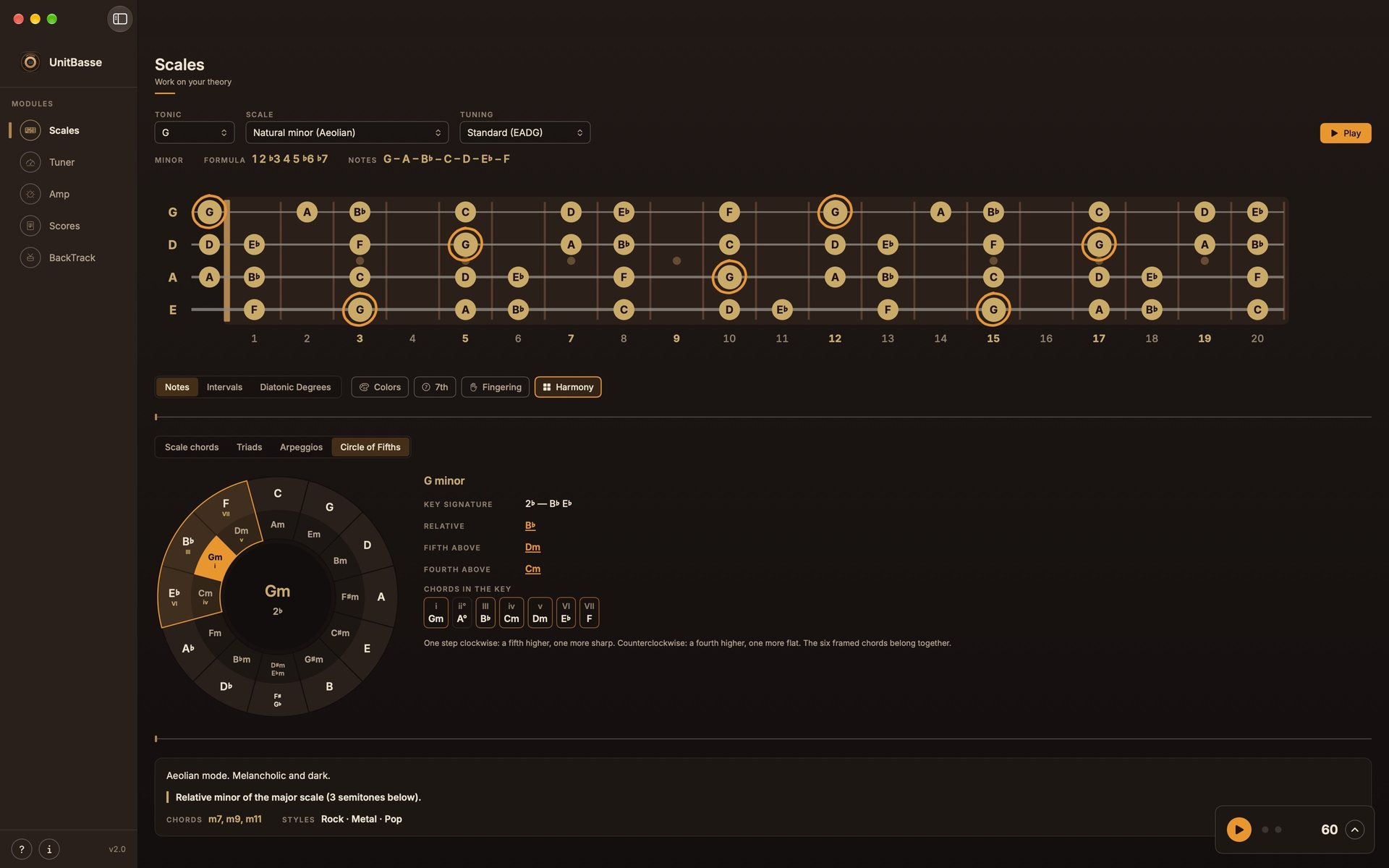
For scales and arpeggios, the Scales tab is the most complete. It shows the scale of the day across the whole fretboard, and Play lets you hear it. The Harmony block adds the chords in the key and their arpeggios, and the Circle of Fifths picks tomorrow’s key.
Frequently asked questions
How long should I practice bass each day?
Fifteen to twenty minutes a day is enough to make progress, as long as you do it every day and in a fixed order. On free days, make each part longer rather than adding new ones.
What should I practice first?
After the warm-up, technique: that’s when your focus is at its best. Save playing with a band or a song for the end, as a reward.
How do I know if I’m making progress?
For each exercise, write down the tempo you reached without mistakes, with the date. Read back through your notebook every month: the numbers show the progress you don’t feel from day to day.