 UnitBasse
Basics · Fretless
The fretless bass:
tone, intonation, technique
A fretless has no frets. Your finger presses straight onto the fingerboard, which gives a singing tone, smooth slides and a vibrato close to the human voice. The trade-off: intonation depends entirely on your finger. You need a good ear and some reference points.
The sound
On a fretted bass, the string stops on a metal bar. On a fretless, it stops under the flesh of your finger, against the wood. The attack is softer, and the note “talks”: it blooms after the attack, a sound often described as “mwah”. Slides are seamless, like a voice or a cello. It’s the sound of jazz, fusion, ballads and a lot of music from around the world.
Intonation: your finger on the line
This is the biggest change. On a fretted bass, you press just behind the fret, and the fret makes the note. On a fretless, your finger makes it: it goes where the fret would be, in other words on the line.
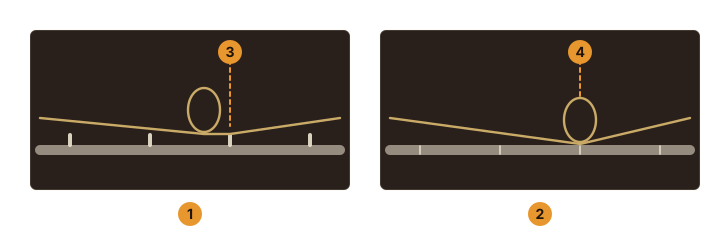
- Fretted bass: the finger just behind the fret.
- Fretless: the finger on the line.
- The fret makes the note.
- The line is only a guide: your finger makes the note.
- Markers: lines on the fingerboard, or dots on the side of the neck. They help, but your ear has the final say: one millimeter off and the note is out of tune.
- Slow practice: play a long note, listen to it against a reference, an open string, a drone or a tuner, and correct it. Then scales, very slowly.
- Octaves and fifths played against an open string tell you right away when they’re out of tune: a good test.
The fretting hand
- The fingertip, nice and upright: a small contact area, placed in the right spot.
- Vibrato: rock your finger back and forth on the fingerboard, without sliding it. The note wavers around its true pitch.
- Slides: from one note to the next, keeping the pressure on. You land right on the target note, by ear.
- Not always one finger per fret: low on the neck, the spaces are wide and big stretches wear you out. Players often pick one finger for each semitone they need and shift the hand more.
The plucking hand
Play with your fingers, near the bridge: the tone is tighter there, and the fretless voice comes through. A pick works, but it hides part of what makes the instrument special.
Strings and fingerboard
Without frets, the strings rub straight on the wood. Flatwounds wear the fingerboard less and give a soft tone. Roundwounds give more “mwah” and brightness, but dig grooves in the fingerboard over time; a hard finish can protect it.
Should you start on a fretless?
Most players first learn where the notes are and how to play in tune on a fretted bass. But nothing stops you from playing one early, if that sound is what made you want to play. It just takes more ear training.
With UnitBasse
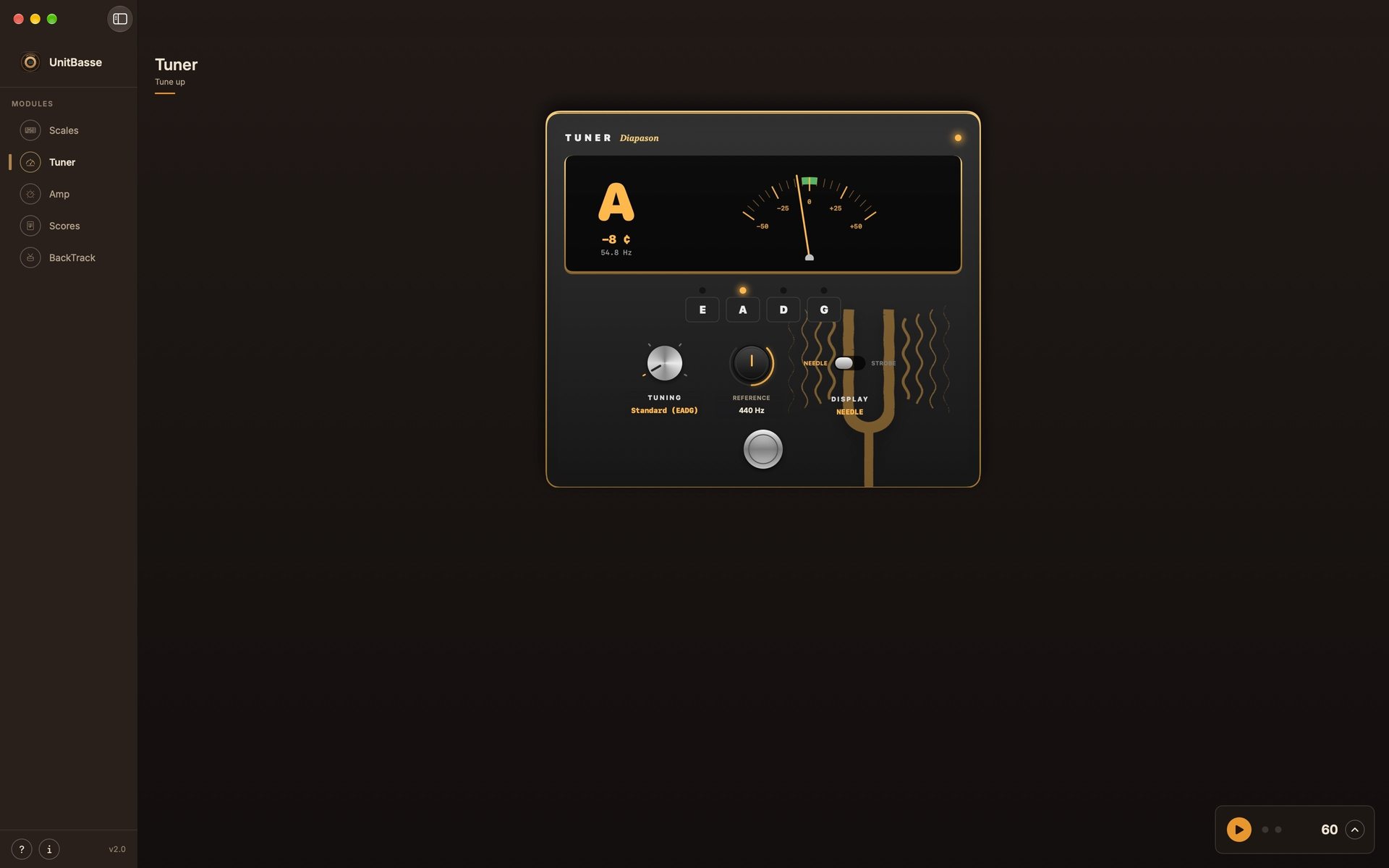
The Tuner lets you check your intonation note by note: play a long note and read how far off it is, in cents. In the NEEDLE display, the scale runs from −50 to +50 cents, with a green zone in the middle. In STROBE, the bands drift left when you’re flat, right when you’re sharp, and stop within one cent: the most precise option for a fretless. The Scales tab shows where the notes of the scale are on the fretboard, so you know where to put your finger even without frets.
UnitBasse doesn’t make your bass sound like a fretless: the fretless sound comes from the instrument and your finger.
Frequently asked questions
Is a fretless hard to play?
The technique is the same as on a fretted bass. What takes work is intonation: your finger makes the note, so you have to listen all the time. In the first few weeks, play slowly, with a reference.
How do I play in tune on a fretless?
Place your fingertip on the line, where the fret would be, not behind it. Check against a reference note or a tuner, and correct by ear: the markers help, your ear decides.
What strings for a fretless?
Flatwounds wear the fingerboard less and give a soft tone. Roundwounds give more brightness and “mwah”, but dig into the fingerboard: a hard finish protects it.